Sales: 021 852 6192  |  082 925 2012 info@mistingsa.co.za ✓ Nationwide Installation
Dust Suppression

Industrial Dust Suppression Solutions

Effective control for mines, quarries, plants & stockpiles. Clean, cool and compliant operations with high-pressure misting systems engineered for South Africa and Africa.

Dust Suppression

Overview

PIC 29
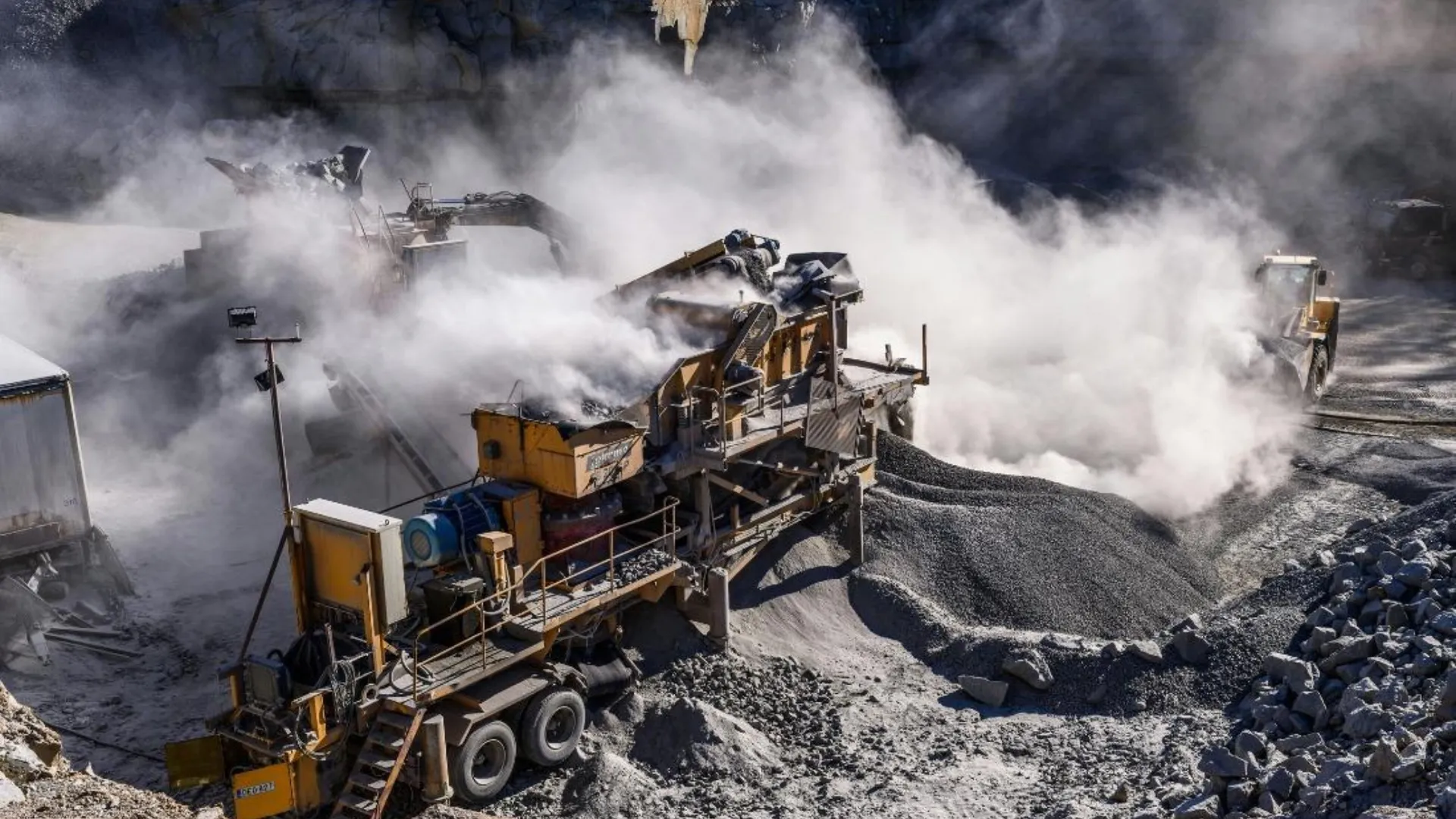
High-pressure dust suppression misting system mining site South Africa
High-pressure dust suppression misting system mining site

What is fugitive dust?

Fugitive dust refers to tiny airborne particles (PM10 and smaller) released during mining, material handling, production, and vehicle movement. These particles originate from stockpiles, crushers and screens, transfer points, haul roads, ROM pads, conveyors, rail and truck loading, and waste handling.

PM10 dust is extremely hazardous. At 10 microns (1/7th of a human hair), it stays airborne for long periods and can include silica, soot, metal fragments, ash, tyre particles, soil fines and industrial residues.

Uncontrolled fugitive dust leads to:

  • Respiratory disease
  • Long-term lung damage
  • Cancer risk
  • Reduced visibility & accidents
  • Dust explosions (in dry plants / mills)
  • Product contamination
  • Community impact & legal pressure
  • Equipment damage

Why dust suppression matters

Health & safety compliance

Modern regulations require facilities to actively reduce airborne particulates. Occupational exposure to PM10 and silica dust is being strictly enforced in mining, processing, construction, bulk materials handling and agriculture.

Heat-stress reduction

Outdoor workers benefit from reduced ambient temperatures when mist is applied correctly.

Fire & explosion prevention

Fine dust accumulation is a known ignition hazard in grain mills, sugar mills, textiles, sawmills, paper plants and coal plants.

Environmental & community compliance

Proper suppression keeps your site clean and reduces community complaints.

High-pressure vs low-pressure systems

Category High Pressure (HPM) Low Pressure (LPM)
Dust Suppression Captures large and ultra-fine dust particles effectively Controls mainly larger particles — fine dust remains airborne
Droplet Size 5–15 microns — matches PM10 & PM2.5 particle sizes 100–200 microns — too large to capture fine airborne particles
Coverage Ultra-fine mist stays suspended — full-area coverage Droplets fall quickly — limited coverage, creates mud
Water Usage Very low — fine atomisation means minimal water consumption High water usage — larger droplets require more volume
Maintenance Durable stainless nozzles — low maintenance, long service life Higher maintenance — nozzles block and wear faster
Cost Effectiveness Lower long-term cost — durable, less maintenance, less water Higher long-term costs — maintenance, replacements & water
Regulatory Compliance Meets PM10 & PM2.5 occupational health standards Often insufficient for modern dust compliance requirements
Best For Mining, quarrying, stockpiles, conveyors, processing plants Light residential or garden use only

High-Pressure Misting is the clear choice for industrial dust suppression.

All Misting SA dust suppression systems operate at 50–100 bar — engineered for compliance, efficiency, and long service life.

Theory & application of dust suppression

Why droplet size determines dust control efficiency

Research shows that dust suppression is only effective when the mist droplet is approximately the same size as the dust particle it aims to capture.

When droplets are too large — NO suppression

Big droplets push air aside; dust particles move around the droplet; no collision = no dust capture. Wasted water, wasted energy, mud creation on ground surfaces.

When droplets are correctly sized — EFFECTIVE suppression

High-pressure fog = 5–15 microns. Matches PM10 and PM2.5 sizes. Droplets stay suspended longer; particles collide, bind, become heavy; dust falls before spreading. Maximum suppression efficiency.

Theory of Dust Suppression

Why droplet size determines whether dust is captured

Research shows that a mist droplet must be approximately the same size as the dust particle to achieve collision and capture.

Low Pressure — No Capture
Large droplet Dust pushed away

Airstream deflects dust particle

No collision — dust stays airborne

High Pressure — Captured
Fine droplet Dust particle

Collision — dust particle captured

Particles bind, become heavy, fall to ground

Misting SA systems produce droplets of 5–15 microns — matching PM10 & PM2.5 dust particle sizes for maximum suppression efficiency.

How our system works

High-pressure pumps (50–80 bar) force water through micro-nozzles to create a fine fog. This fog binds airborne dust at the source: stockpile faces, crusher discharge, screens, conveyor transfer points, vehicle off-loading bays, road crossings, rail load-out and processing sheds.

System components

  • High-pressure pump station
  • Misting rings / manifolds
  • Fog curtains
  • Solenoid / zone control
  • Dosing (surfactant) systems
  • Anti-drip stainless nozzles
  • Automated start-stop control
  • Cyclone / wind compensation (optional)

Dust suppression technology

Misting SA uses overhead misting lines, industrial misting fans, fog curtains, dust blasters, dosing tanks, chemical surfactants, custom high-pressure pump systems, and specialised control panels.

Lower maintenance, larger area coverage, better particle collision.

Typical applications

  • Dust curtains
  • Stockpile control
  • Conveyor / transfer point control
  • Processing plants
  • Dust blasters & fog cannons

System design factors

We design each system according to:

  • Particle size distribution
  • Wind direction
  • Conveyor speed
  • Fall height
  • Moisture absorption
  • Material reactivity
  • Environmental conditions
  • Equipment sensitivity
  • Worker zones
  • Droplet size & nozzle selection

Get a Quote

Complete dust suppression systems across South Africa, Zimbabwe, Zambia, Namibia, Botswana, DRC and Mozambique.

Dust Suppression · Curtains

Fog Curtains & Misting Line Systems

High-pressure dust control for mining, conveyors, transfer points & processing plants.

Dust Suppression / Fog Curtains

Continuous-Wall Fog Curtains

Linear-zone solution
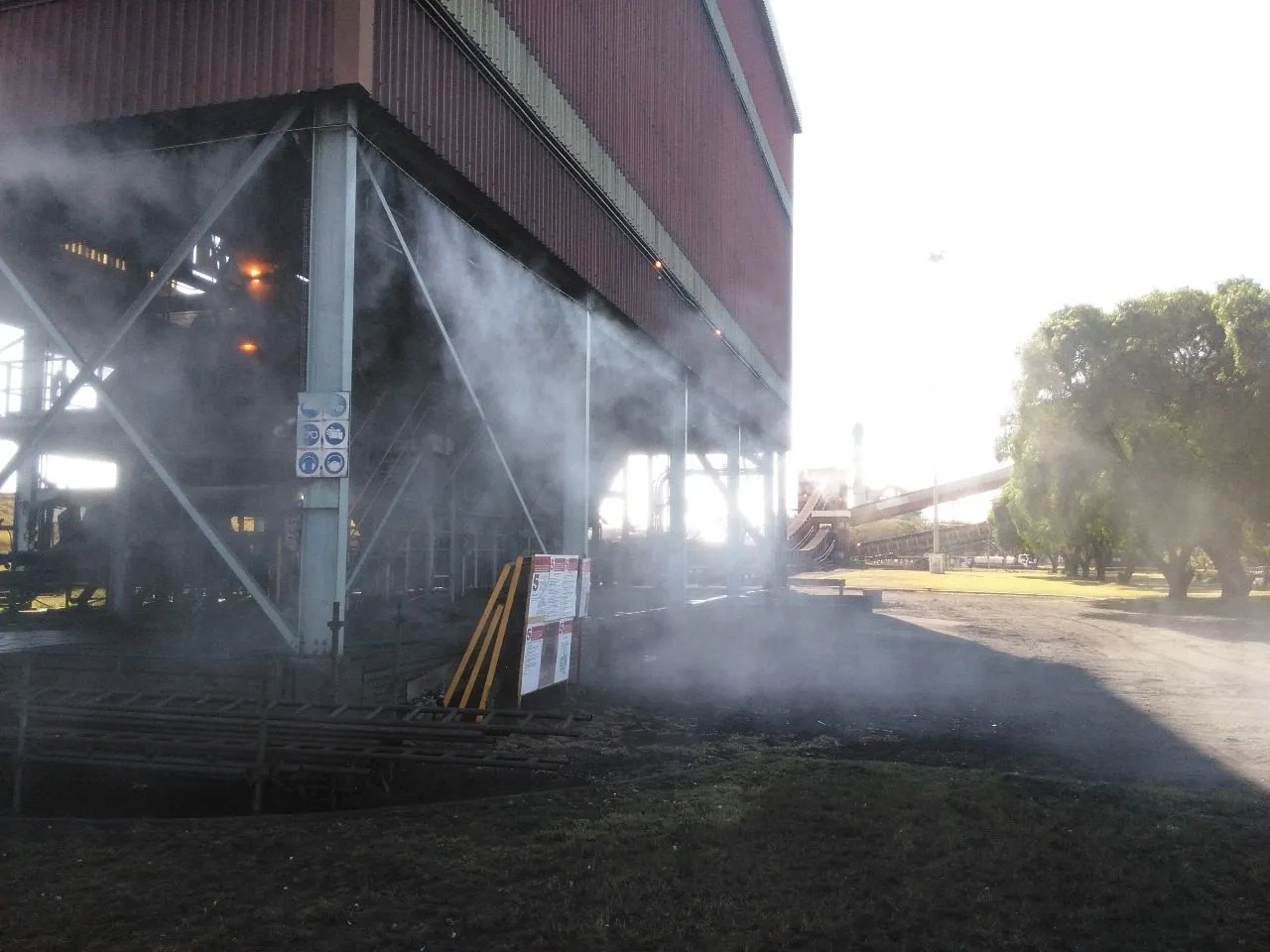
Fog/Mist Curtain — high-pressure dust suppression system in operation

Fog Curtains from Misting SA create a continuous wall of ultra-fine droplets designed to capture and neutralise airborne dust at the source. Whether installed along conveyors, transfer points, crusher feeds, ROM tips, stockpiles or processing areas, our systems deliver reliable, high-impact dust control with minimal water usage. The preferred solution for mining operations across South Africa, Zambia, Zimbabwe, Mozambique and surrounding regions.

Introduction

Uncontrolled dust is a major environmental, health, and operational challenge across mining and industrial sites. Fog Curtains create a consistent barrier of micro-droplets engineered to match the particle size of airborne dust, ensuring maximum collision efficiency. Our high-pressure systems use advanced nozzles and industrial pumps to generate 5–80 micron droplets — the ideal size to bind both PM10 and PM2.5 particles.

Why fog curtains are effective

Fog curtains work on the principle of droplet-to-particle collision efficiency. When droplets are equal or smaller than the dust particle size, the chance of interception increases dramatically.

  • Captures both visible dust and ultra-fine respirable particles
  • Prevents dust from escaping conveyors and transfer points
  • Reduces wind-driven dust at loading and offloading points
  • Eliminates dust clouds that reduce visibility and safety
  • Low water consumption — micro-droplets do NOT wet the product or machinery
  • Suitable for underground and surface operations

Where fog curtains are used

  • Transfer points
  • Conveyor discharge points
  • Hopper and chute drops
  • ROM tip bins
  • Crusher inlets and outlets
  • Screens and sorting areas
  • Stockpile perimeters
  • Silos, bagging, loading and offloading
  • Indoor processing plants

If a dust plume forms in a linear area — a curtain is the correct solution.

How the system works

Fog Curtains use:

  • High-pressure pumps (70–100 bar)
  • Precision stainless-steel nozzles (0.15–1.0 mm)
  • Industrial-grade stainless-steel misting lines
  • Optional solenoids, PLC interfacing, and automated controls

The system produces a thin, dense "fog wall" across the dust source. When dust hits the fog wall, droplets bond instantly and fall out of suspension. Micro-droplet fog captures dust without wetting material, machinery, or surrounding area.

Technical specifications

High-Pressure Pumps

Pressure
70–100 Bar
Flow rates
2 LPM to 50 LPM
Designed according to
Total nozzle count, nozzle orifice size (0.15–1.0 mm), required droplet mass and capture efficiency, length of curtain system

Misting Lines

Material
Industrial stainless-steel tubing
Bracket spacing
0.75–1.0 m
Fittings
Welded or compression
Build
For harsh mining environments

Nozzles

Material
Stainless steel
Sizes
0.15, 0.2, 0.3, 0.5, 0.7, 1.0 mm
Droplet size
5–80 microns
Optional
Anti-drip valves

Water Requirements

Filtration
5–20 micron
Optional
Carbon filtration · softening · auto-flush filtration

Key advantages

  • Extremely low water usage
  • Does not wet the product
  • Fully modular — extend or modify easily
  • Handles extreme dust conditions
  • High uptime, low maintenance
  • Compatible with master/slave systems, automated solenoids, and PLC/SCADA-based control

Optional add-ons

  • Automated on/off via conveyor interlock, motion sensors, dust sensors, wind sensors
  • Solenoid-driven zone control
  • Remote control and site interfacing
  • Filtration upgrades
  • Pump redundancy systems
  • Chemical dosing (for severe dust loads)

Why choose Misting SA

With more than 20 years of engineering, installation, and high-pressure misting experience, we supply systems proven across some of the harshest mining sites in Southern Africa.

  • Durable
  • Scalable
  • Energy efficient
  • Custom-built for African mining conditions

Every system is designed based on the client's dust load, available water, airflow environment, nozzle count, and pump requirements.

To design the correct Fog Curtain for your site, our team will ask for:

Photos · line length (in metres) · conveyor/transfer point positions · required reduction area · available water source.

Dust Suppression · Stockpiles

Stockpile Dust Control Systems

Effective dust management for open-air stockpiles, material heaps, loading areas & bulk handling yards.

Dust Suppression / Stockpile

Open-Air Stockpile Suppression

Stockpile dust suppression high-pressure misting system South Africa
Stockpile dust suppression high-pressure misting system

Introduction

Open stockpiles are one of the largest contributors to fugitive dust emissions in mining, quarrying, agriculture, waste facilities, and bulk-material operations. Wind disturbance, vehicle movement, loading, and tipping release enormous amounts of airborne particulate matter — creating safety, environmental and operational challenges.

Misting SA designs high-pressure fogging systems and fog curtains specifically engineered to suppress dust at the source, preventing it from leaving the stockpile. Our systems create an ultra-fine droplet that matches the size of airborne dust particles, allowing effective binding and rapid fallout without wetting the material.

Why stockpile dust control matters

Safety

Uncontrolled dust reduces visibility, poses breathing risks, and increases accident potential for workers and machine operators.

Environmental compliance

Many facilities must comply with dust-emission standards. Our systems help reduce PM10 and PM2.5 emissions to remain within permitted limits.

Operational efficiency

Dust clouds increase maintenance costs by clogging radiators, fouling machinery, and damaging sensitive equipment.

Community impact

Stockpiles near populated or agricultural areas contribute to nuisance dust and complaints. Effective suppression protects your social licence to operate.

How our high-pressure stockpile systems work

Misting SA uses the same proven high-pressure technology applied across mining and industrial dust suppression, adapted specifically for wind-exposed stockpiles.

  • Ultra-fine droplets (5–25 microns) — Matches the size of airborne dust particles for maximum collision efficiency
  • Wind-resistant fog curtains — Engineered to create a stable fog layer that resists wind drift while covering large surface areas
  • Low water usage — High-pressure nozzles consume minimal water while maximising airborne dust capture
  • Modular layout — Stockpile fog systems can be installed around the perimeter, over tipping points, or along the working face depending on dust behaviour

System equipment options

Static fog curtains

Stainless-steel mist lines installed around the pile to create a containment envelope.

High-pressure fog cannons (Dust Blasters)

Project fog 30–110 m for large or high-wind sites.

Combination systems

Static lines + fog cannon = ideal for large, angled, or variable-height stockpiles.

Pump stations

  • High-pressure pumps (70–100 Bar)
  • Flow rates selected according to required coverage (5–50 LPM)
  • Automated pressure control

Filtration

Auto-flush filtration systems to protect pumps and nozzles from debris and blockage.

Key advantages

  • Controls dust without wetting the material — quality remains unaffected
  • High-pressure misting reaches airborne dust faster — particles bound before they travel
  • Engineered for extreme environments — mining, aggregates, wood chips, grain, coal, sand & ore
  • Scalable for small yards or massive mining operations
  • Optional integration: remote start/stop, timers, control room interface, wind-speed automation

Ideal applications

  • Coal, ore & mineral stockpiles
  • Sand & aggregate yards
  • Waste / landfill stockpiles
  • Food / agro stockpiles (grain, feed)
  • Wood chips & sawmills
  • Construction material stockpiles
  • Quarries & crushing sites
  • Loading & tipping areas

Send us your stockpile photos, dimensions, and distance from water/power

We'll provide a customised proposal and recommended system configuration.

Dust Suppression · Conveyors

Transfer Point Dust Control Systems

High-pressure misting solutions for conveyor transfers & material handling.

Dust Suppression / Conveyor

Conveyor & Transfer Point Control

PIC 100
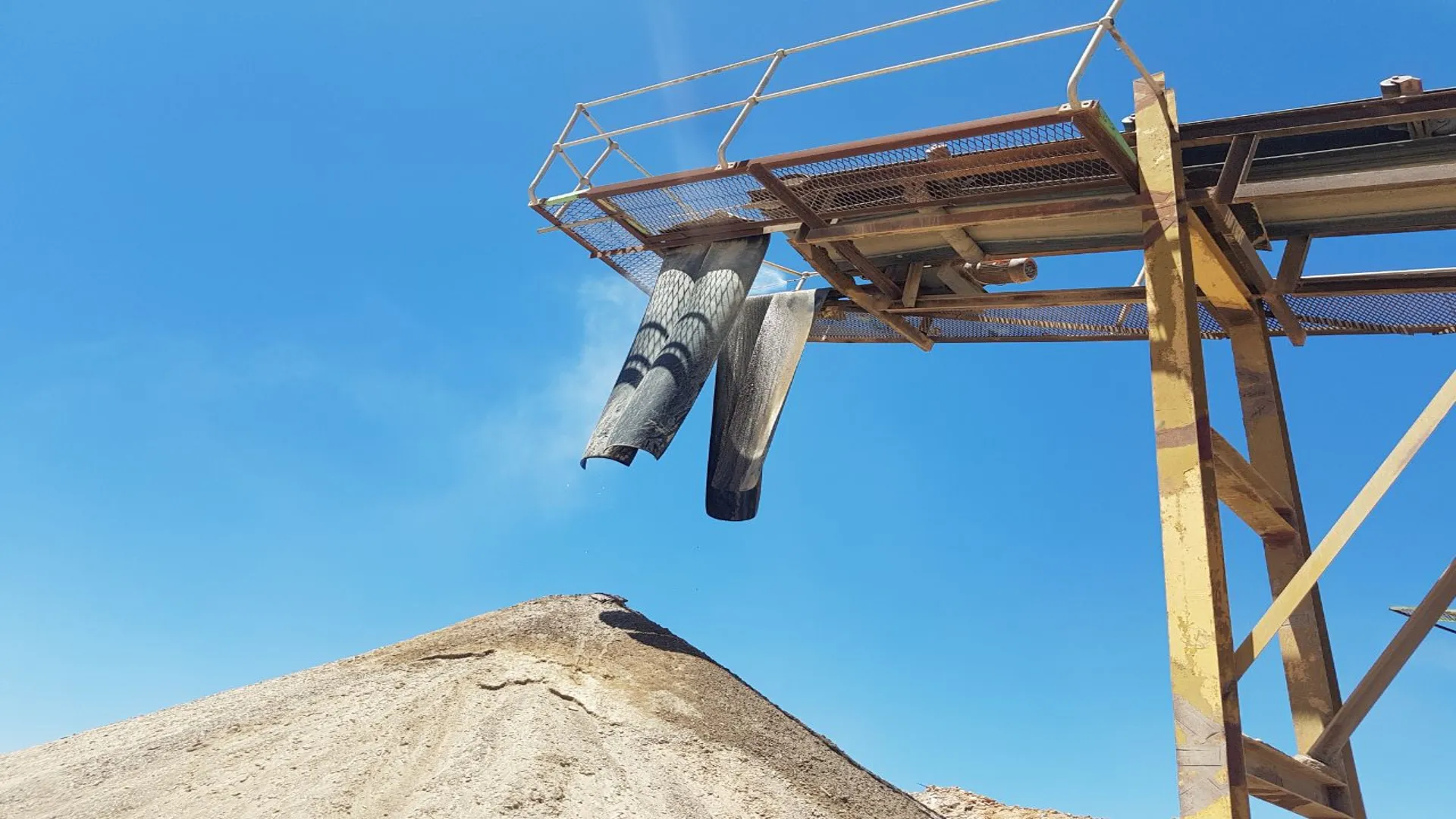
Conveyor and transfer point dust suppression misting system South Africa
Conveyor and transfer point dust suppression misting system

Overview

Transfer points are some of the highest-dust-producing zones in mining, quarrying, aggregate handling, fertilizers, grain, cement, and manufacturing. When material moves from one conveyor to another, or falls through a chute, large amounts of dust become airborne — often well into the PM10 range.

High-pressure misting is the most effective method to capture dust at the source, improving air quality, protecting workers, and extending equipment life.

Our systems are engineered to:

  • Prevent dust migration across the plant
  • Improve visibility and worker safety
  • Reduce dust fallout and surface contamination
  • Protect electrical equipment and bearings
  • Minimise dust inhalation and health risks

How the system works

At transfer points, material free-falls or impacts, causing micro-dust to disperse. A high-pressure fog curtain is placed around the transfer chutes, creating a dense fog barrier. The ultra-fine droplets (5–80 microns):

  • Remain suspended longer
  • Collide with airborne dust particles
  • Increase dust mass
  • Drop the dust back into the material flow

This method captures both coarse dust and respirable PM10 particles, significantly reducing exposure.

System components

High-pressure pump station

Operating pressure
70–100 bar
Flow rates
Up to 50 LPM
Build
Stainless steel manifolds, pressure regulation & industrial safety valves
Designed for
Harsh mining and processing environments

Fog curtain nozzle lines

Material
Stainless steel
Length
Custom per transfer point
Spacing
Engineered for dust load & airflow
Nozzle sizes
0.2 mm to 1.0 mm

Precision nozzles

Droplet sizes
5–80 microns
Features
Anti-drip valves; designed for PM10 capture

Auto-flush filtration

Operation
Automatic self-cleaning
Function
Removes sediment and particulates; protects pumps and nozzles; ensures consistent droplet size
Suitability
Continuous industrial use

Where transfer point systems are used

  • Conveyor belt loading and discharge points
  • Drop chutes
  • Crusher to conveyor transitions
  • Screening plant transfer decks
  • Grain and fertilizer conveyor transfers
  • Coal, iron ore, silica, aggregates
  • Wood chips and sawdust handling
  • Conveyor junctions inside processing plants

Benefits of transfer point fogging

  • Control of respirable PM10 and PM2.5
  • Reduces health risks for workers
  • Lowers dust carry-over into other zones
  • Prevents electrical and mechanical damage
  • Low water usage (high-pressure systems are efficient)
  • Minimal mud creation compared to low-pressure systems
  • Improves plant cleanliness
  • Extends conveyor belt lifespan
  • Easy to integrate with existing conveyors

Why high-pressure systems outperform low-pressure

  • Ultra-fine droplets stay airborne longer
  • Better dust binding efficiency
  • No wetting of conveyor belts or motors
  • Effective for fine dust, not just coarse dust
  • Lower total water consumption
  • More durable in harsh environments

Why choose Misting SA

  • Over 20 years of industrial dust control experience
  • Reliable and field-proven equipment
  • Modular systems compatible with any conveyor layout
  • Fast turnaround and support across Africa
  • In-house expertise for heavy-dust environments
  • Solutions installed across mining, agriculture, and material handling

Need engineered dust control for your transfer points?

Send us photos and basic measurements of your conveyor transitions — our team will design the correct fog curtain system for your layout.

Dust Suppression · Plants

Dust Suppression for Processing Plants

High-pressure fog/dust curtains and dust blasters engineered for crushers, screens, sorting lines, recycling plants, and heavy industrial environments.

Dust Suppression / Processing Plants

Plant-Wide Dust Control

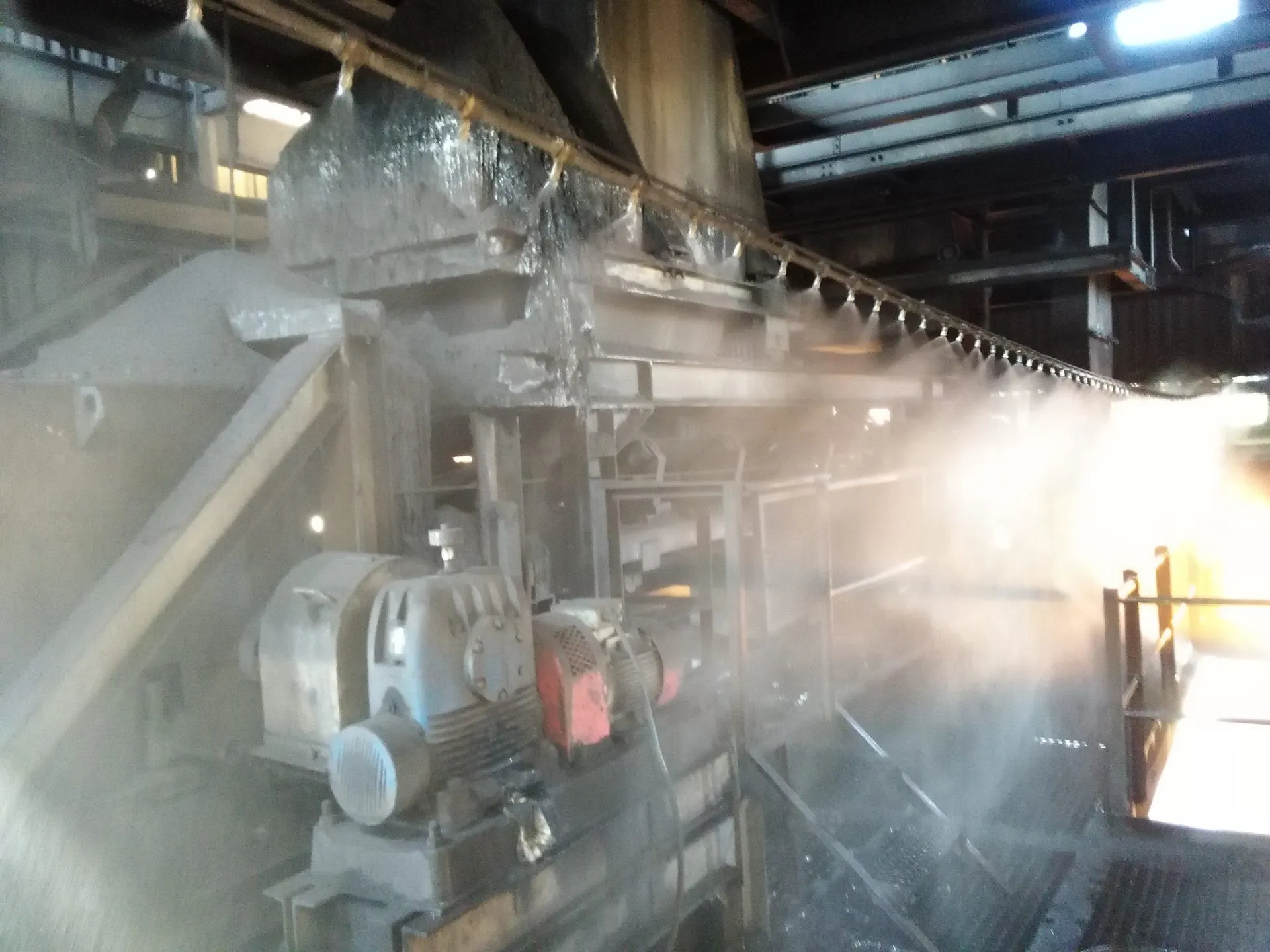
Processing plant dust suppression misting system South Africa
Processing plant dust suppression misting system

Introduction

Processing plants are high-activity zones where material is constantly breaking, dropping, crushing, transferring, or colliding — all of which create fine, airborne dust. This dust spreads rapidly through work areas, settles on equipment, and becomes a serious safety, health, and compliance risk.

Misting SA designs high-pressure dust suppression systems specifically for these demanding environments, ensuring dust is captured instantly and kept under control throughout the production process.

Why dust control is critical in processing plants

Workplace safety

Dust reduces visibility around crushers, screens, and conveyor chutes — increasing accident risk.

Health & compliance

Fine particles (PM10 / PM2.5) cause respiratory illness and must be controlled to meet regulatory limits.

Equipment protection

Dust accelerates bearing failures, motor overheating, electrical faults, clogged filters and sensors. A clean plant runs longer, safer, more efficiently.

Production efficiency

Less dust = fewer stoppages, lower maintenance, cleaner products, stable throughput.

How our systems work

Processing plants create different types of dust, so each zone requires a specific suppression method. Misting SA uses ultra-fine high-pressure mist to bind airborne particles at the exact moment they are released.

Fog/dust curtains (localised control)

Installed around crushers, screens, transfer points, hoppers, chutes and sorting stations. These systems form a "mist barrier" that captures dust before it escapes.

Dust blasters (extended-reach control)

Used for large open processing floors, outdoor plant sections, and multiple-generation dust sources. Dust Blasters project fine droplets over 25–110 m, ideal for larger plant areas.

Ultra-fine droplets (5–25 microns)

Matched to dust particle sizes for maximum collision efficiency — without wetting material or machinery.

High-pressure pump stations (70–100 bar)

Engineered for industrial duty cycles and equipped with auto-flush filtration, stainless steel fittings, stable pressure regulation, and automation options.

Equipment options for processing plants

1. Fog/dust curtain systems

Stainless steel mist lines · custom spacing for nozzles up to 1.0 mm · ideal for enclosed or semi-enclosed plant zones.

2. Dust Blasters

25–110 m throw distance · 90–330° oscillation · adjustable tilt · trailer or skid-mounted options.

3. High-pressure pump stations

5–50 LPM depending on plant size · 70–100 bar · auto-flush filtration included.

4. Optional controls

Timers · remote activation · PLC interfacing (if required) · zone-based start/stop.

Benefits of Misting SA systems

  • Captures dust at the source
  • Prevents dust escaping into adjacent zones
  • Reduces downtime from cleaning and maintenance
  • Minimises wear on motors, bearings, screens, and belts
  • Improves plant visibility and safety
  • Supports compliance with occupational health standards
  • Uses less water than traditional low-pressure systems

Ideal industries

  • Crushing & screening plants
  • Mining plants
  • Foundries
  • Recycling facilities
  • Paper & pulp processing
  • Wood processing
  • Fertilizer plants
  • Animal feed plants
  • Cement and aggregate plants
  • Brick and block manufacturing

To design a complete solution for your processing plant, send us:

Photos of dust-generating areas · approximate layout or flow direction · distance to water and power.

Dust Suppression · Mobile Units

Dust Blaster™ High-Pressure Dust Suppression

Industrial-grade dust control for mining, crushing, stockpiles, and loading operations across South Africa, Zimbabwe, Zambia and Africa.

Dust Suppression / Dust Blaster

The DB Range

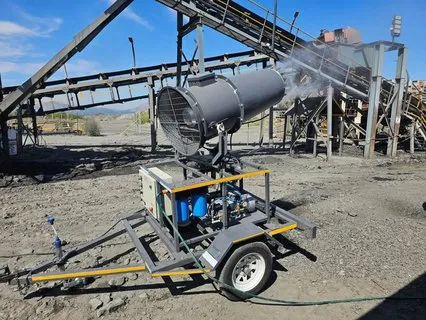
PIC 32
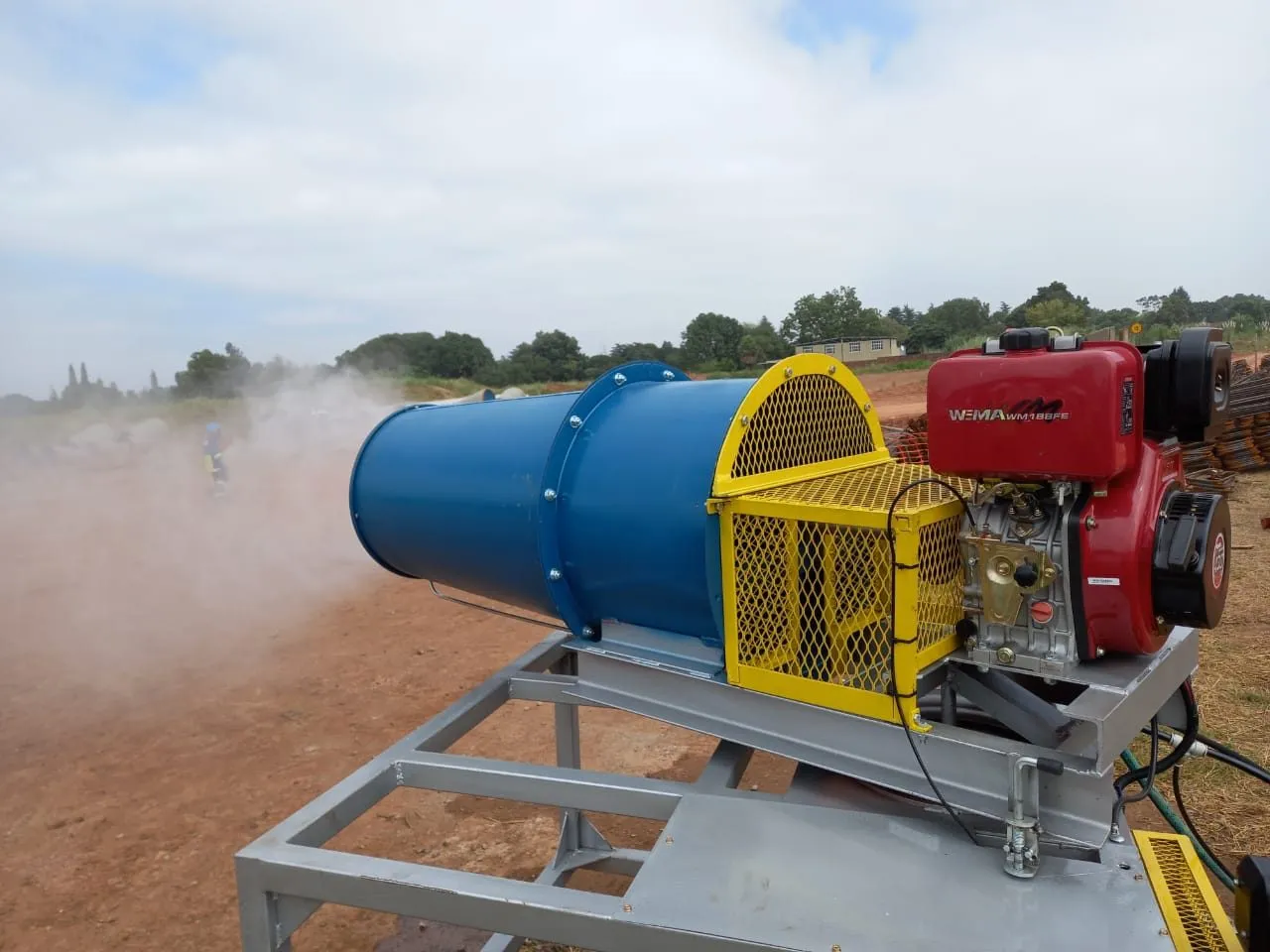
Dust blaster cannon dust suppression system mining South Africa
Dust blaster cannon dust suppression system mining

The Dust Blaster™ range from Misting SA is engineered for heavy-duty dust suppression in mining, quarrying, stockpiles, demolition, loading bays, concrete plants, sawmills, and industrial yards across Africa. Using precision-engineered high-pressure pumps and fine-mist nozzles, the Dust Blaster™ generates a powerful plume of 5–25 micron droplets (or up to 50 microns on larger units), delivering maximum airborne dust capture without wetting equipment.

Designed for African conditions, the Dust Blaster™ is robust, mobile, and capable of long-distance coverage — the trusted solution in Zimbabwe, Zambia, DRC, Botswana, Namibia, and South Africa.

Why high-pressure dust suppression?

  • Significantly reduces airborne PM10 and PM2.5 dust
  • Captures micro-particles before they spread
  • Prevents equipment fouling
  • Reduces water usage compared to low-pressure systems
  • Minimises mud creation at loading areas
  • Safer for workers and compliant with dust control regulations
  • Reduces fire and explosion risk
  • Designed for continuous industrial operation

Product line-up

Electric Dust Blaster

Electric Dust Blaster

Portable trailer-mounted electric model

Truck Mounted Dust Blaster

Truck Mounted Dust Blaster

Heavy-duty 30-110m range system

Push/Pull Trailer Blaster

Push/Pull Trailer Blaster

Compact high-pressure misting cannon

Vehicle Trailer Blaster

Vehicle Trailer

Manual push trailer for flexible positioning

Technical explanation

How it works

High-pressure nozzles atomise water into ultra-fine droplets. These droplets collide with airborne dust, increasing their weight until they fall to the ground. The fine mist remains suspended longer, allowing effective capture of both large and ultra-fine particles.

Droplet size ranges

  • Outdoor misting: 50–150 microns
  • Indoor / enclosed bays: 20–80 microns
  • Dust Blaster nozzles: 5–25 microns (standard); 5–50 microns (truck-mounted units with larger pumps)

Smaller droplets = better particle binding, lower water use, and longer hang time.

Full technical specifications

DB560 Push Trailer Dust Blaster

Throw distance
25–45 m
Oscillation
90°–180° adjustable
Pump
High Pressure 100 Bar (low flow)
Droplet size
5–25 microns
Height angle
Fully adjustable
Frame
Push trailer · galvanised · rust-proof paint
Power
5.5 kW motor (standard)
Optional extras
Raw water filtration · generator · water tank trailer · master & slave operation · electrical interface panel · remote controller

DB560 Vehicle Trailer Dust Blaster

Throw distance
25–45 m
Oscillation
90°–180° adjustable
Pump
High Pressure 100 Bar (low flow)
Droplet size
5–25 microns
Height angle
Fully adjustable
Frame
Vehicle trailer · galvanised · rust-proof paint
Power
5.5 kW motor (standard)
Optional extras
Raw water filtration · generator · water tank trailer · master & slave operation · electrical interface panel · remote controller

DB560 Truck-Mounted Dust Blaster

Throw distance
30–110 m
Oscillation
90°–360° adjustable
Pump
High Pressure 100 Bar
Droplet size
5–50 microns
Height angle
Fully adjustable
Frame
Truck-mounted · heavy-duty steel
Power
11–15 kW motor (model dependent)
Optional extras
Remote controller · electrical interface panel · master & slave operation · water tank

Get a Dust Suppression Proposal

Tell us your site, dust type, and area — we'll design the right system and send a detailed proposal.

Website maintained by Webify24.com